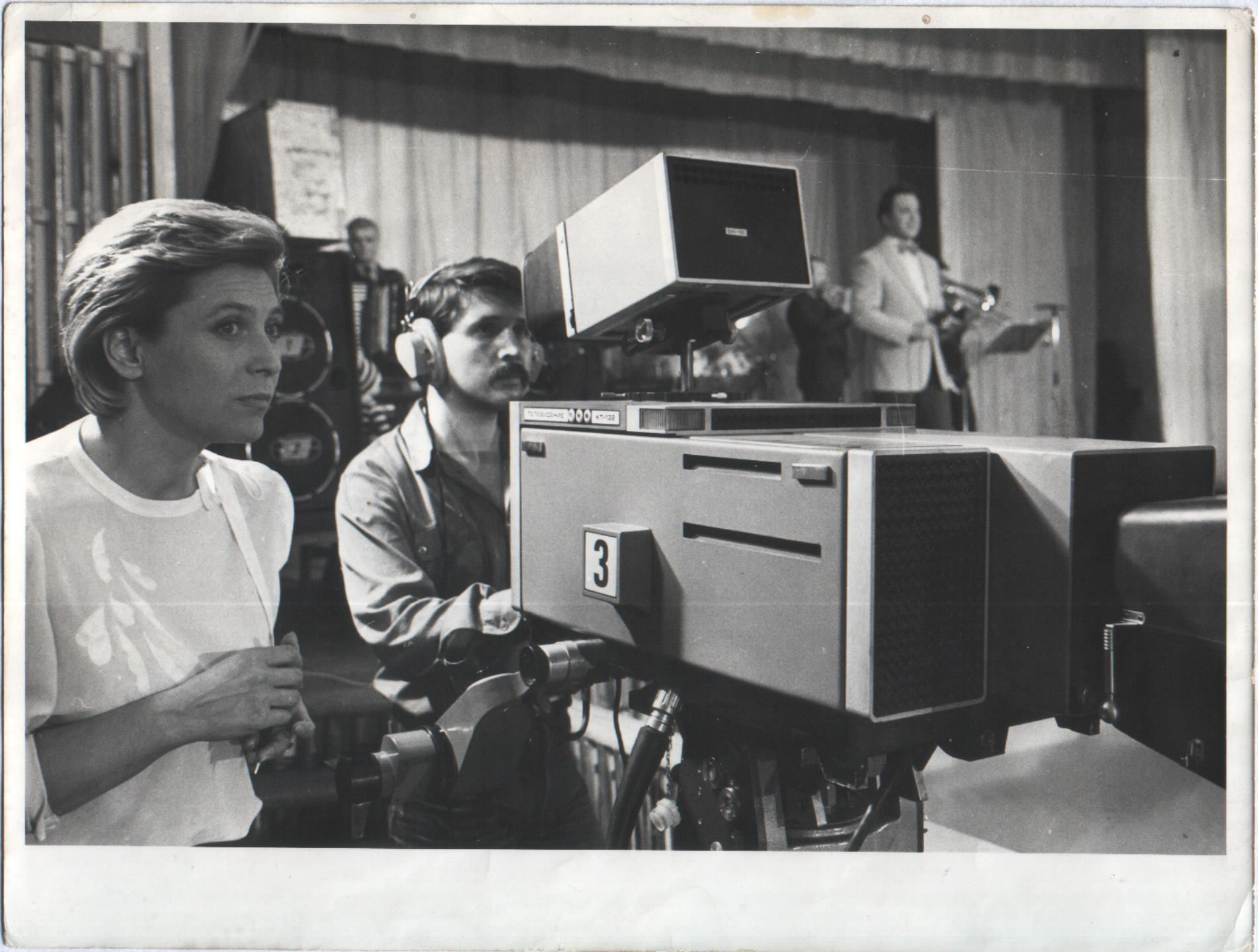


Tatyana TSYMBAL
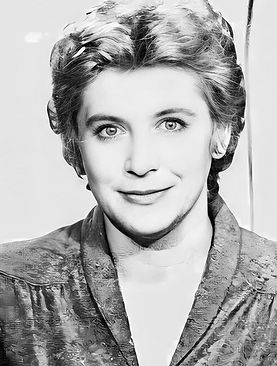
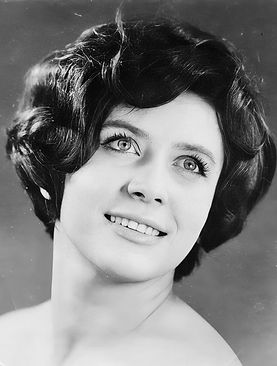
Tatyana Tsymbal is a legend of Ukrainian television, a People’s Artist of Ukraine, an announcer and television host whose face and voice are familiar to several generations of viewers.
In the first part of Gregory Antimony’s Interview Hour, the conversation focuses on the history of Ukrainian television, which was being created almost from scratch in the late 1960s at 26 Khreshchatyk Street. Tatyana Tsymbal recalls the first live broadcasts, early television productions, her colleagues, and the people who were searching for a new television language and were deeply devoted to their profession.
A separate part of the conversation is dedicated to her family. Tatyana’s grandfather was killed in the First World War. Her father survived the war, German captivity, and the French Resistance, and against all odds returned home. Her mother lived through the occupation of Kyiv and the loss of her young son. The story of one family becomes part of the tragic history of millions of Ukrainian families in the twentieth century.
Tatyana also speaks about Chornobyl, which she witnessed as a journalist, before the conversation turns to the current war.
In the second part, she remembers February 24, 2022, the deserted Khreshchatyk, the first days of the full-scale invasion, and how Kyiv unexpectedly became one large family. Tatyana speaks about mutual support, volunteers, Volodymyr Zelenskyy, the Ukrainian Sixtiers movement, national consciousness, and a country that has changed during the years of war and learned to feel its unity more deeply.
Why does she return to Kyiv despite the danger?
“Where else would I go? That is my home.”
This is a conversation about memory, family, language, dignity, and people who, even during wartime, continue to work, love, raise children, and choose life every day.


TATYANA TSYMBAL:
TELEVISION, FAMILY, WAR, AND MEMORY
Part One: THE BEGINNING OF HER TELEVISION CAREER
GREGORY ANTIMONY: Hello, dear viewers. This is Interview Hour. I am Gregory Antimony. It is with enormous pleasure that I introduce today’s guest. She is a true legend of Ukrainian television — Tatyana Tsymbal.
Since you have such an extraordinary history and have left your mark on Ukrainian television, we will certainly talk about your individual programs and series. But first, for those who may be hearing your name for the first time, although that is difficult to imagine, I would like to say something about you that makes one want to stand up and take off one’s hat.
Tatyana truly is a living legend of Ukrainian television. What year did you begin working in television?
TATYANA TSYMBAL: In 1969.
GREGORY ANTIMONY: In 1969? Right after graduating from university?
TATYANA TSYMBAL: I had not graduated yet. I went through what today would be called a casting. It was a major competition, with eighty applicants for each position. They were recruiting announcers for the Kyiv Television Studio.
There were specific requirements. You had to have a university education in any field, because they were selecting people whom television needed. There were three rounds, including a camera test. A committee sat in the control room and watched how you looked and how you communicated.
I applied the first time and did not pass. The following year, my Ukrainian pride had been stirred up, and I tried again. The first time, they had told me that my articulation was weak. I was studying Romance and Germanic philology, I loved Spanish and studied it intensively, but I had no idea what articulation meant in our profession.
GREGORY ANTIMONY: What did it mean in those years to get a job in television?
TATYANA TSYMBAL: You have to understand that there was no YouTube, no mobile phones, no satellite communication…
GREGORY ANTIMONY: There was nothing at all.
TATYANA TSYMBAL: There was something else, of course. But television had an incredible attraction. It was something new and extraordinary. Television announcers seemed almost like celestial beings. If someone saw an announcer on the street, they would go home and tell all their neighbours.
People knew them, loved them and recognized them. But that was not really the point. I did not even know where the television studio on Khreshchatyk was.
It was my husband who encouraged me to try. He prepared me for it in a very funny way. He would place a Zenit camera on a tripod — a Zenit 3M, which was considered an excellent camera at the time. I would sit on a chair in front of it and read the television schedule from the newspaper. Back then, the newspapers printed the schedules of the only one, and later two, television channels.
26 Khreshchatyk: The Early Years of Ukrainian Television
GREGORY ANTIMONY: There were two channels then, correct?
TATYANA TSYMBAL: Yes, two. From around 1960 or 1962, a Moscow channel became available. Before that, there was Kyiv Television, which was even called KST. I remember its opening graphic from childhood.
Later, everything developed. We shared airtime on the second channel with the regional editorial department. Some programs were broadcast on one channel, while the Moscow news program Vremya and other Central Television broadcasts were shown throughout the Soviet Union and in all the republics.
GREGORY ANTIMONY: As I have already said, we will certainly discuss some of your programs. But I am interested to know whether you had any favourite channels that remained important in your life or influenced your professional path.
TATYANA TSYMBAL: A channel is, of course, its people.
GREGORY ANTIMONY: Naturally.
TATYANA TSYMBAL: You understand that very well. I have a formula that I believe is absolutely true: it does not matter where you work; what matters is whom you work with.
My television childhood coincided with a very interesting period in television. There was an enormous amount of creativity. There were no licensed formats. We created our own projects. Everything was born within the walls of the legendary building at 26 Khreshchatyk.
The first television people were dreamers and romantics. They came from different backgrounds: theatre directors, theatre actors. We even had a writer who headed the popular science department.
They did not yet know what television was or how it should work. They were laying the foundations of an entirely new form of communication.
Imagine producing a live studio broadcast when there was no recording. Everything had to be planned precisely, including every camera movement. There might have been three cameras in our first large studio, where, for example, a live play was broadcast using a two-storey set. Two additional cameras would be kept in reserve because any camera could suddenly fail.
Yet they did it. They wanted to do it. They invented ways to make it possible.
There is a fascinating and now legendary story that I heard from one of the founders of Ukrainian television. He later established the television directing department at what is now the Karpenko-Karyi University, which at the time was a theatre institute.
When we were leaving the legendary building on Khreshchatyk and moving to a newly constructed television complex, I came up with the idea of organizing a day-long live broadcast. We invited everyone who had worked at Khreshchatyk over the years, as well as those who had appeared there and everyone for whom that address was important.
Many of our veterans came. Later, some people told me, “Listen, I had not planned to go anywhere. It was Saturday, I was sitting at home and watching what was happening. But how could I stay away?”
Viktor Borisovich Kisin, whom I am speaking about now, told us how the first live street report was made before the appearance of mobile television units.
For viewers who are not connected with television, a mobile television unit is a vehicle equipped to broadcast from locations outside the studio. Such units appeared sometime in the 1950s, first in Moscow, as almost everything did. I believe the first report was broadcast by Fokin from the Red October factory around 1957.
But Ukrainian television began in 1951. The television building and tower on Khreshchatyk had been completed in 1949.
The television centre stood directly on Kyiv’s central thoroughfare. The surrounding buildings and covered arches that exist today had not yet been constructed. The building opened directly onto the street.
So they simply rolled the cameras up to the windows and made the first live report from outside.
You have to understand that until then, everything had been enclosed within four walls, inside the studio. There were only two studios. Announcers entered the frame, said something and left.
I still have old footage illustrating how little people understood this new medium. Even the word “announcer” had come from radio. They would appear on the screen and say, “Good evening, dear radio viewers.”
And suddenly, wherever you were sitting at home, you could find yourself on Khreshchatyk at that very moment. It was possible only because of imagination and enthusiasm.
I loved those people very much. Many of them are no longer alive. They were my teachers and my friends, and I deeply value the fact that they accepted me into their circle.
That is why that period is so precious to me. So much was being discovered.
GREGORY ANTIMONY: It was even revolutionary in its own way.
TATYANA TSYMBAL: Of course. It was a search for a new language of communication.
Television borrowed the language of the screen from cinema: the shot, the framing, the camera angle. These are the tools through which we communicate with the viewer.
From theatre, television took immediate live communication — something happening at that exact moment.
All of this had to be understood and interpreted. The screen language existed, but the television screen was different. The distance between the speaker and the audience was completely different from cinema.
Even the intonation with which you and I speak to the viewer on camera is different.
Vladimir Sappak described this very well in his early book Television and Us. I believe the text first appeared as a series of essays in a magazine. That book began my serious interest in television.
He analysed the first steps of television as an art form. That is important because I consider television an art. The camera operators and sound engineer standing here are also creators. They create our screen image.
GREGORY ANTIMONY: This is very interesting. To what extent did Ukrainian television, which had only just appeared, depend on Moscow?
TATYANA TSYMBAL: It depended on Moscow, of course.
There was a single Union budget. There were no commercial channels, and television did not earn its own money. Everything was allocated centrally.
Do you remember what a “limit” was?
GREGORY ANTIMONY: Of course.
Television and Moscow
GREGORY ANTIMONY: It is difficult to forget.
TATYANA TSYMBAL: Foreigners could not understand it. They would say, “You have the money, so why can’t you buy it?” And the answer would be, “Because the limit has been used up.”
Decisions about how much money to allocate to each area were made centrally in Moscow.
Broadcasting policy was also determined there.
There were some practices that were probably useful. In Moscow, there was a woman named Flora Leonidovna Ageyenko who carefully monitored the correct stress in the surnames of the leaders of the Communist parties of the so-called fraternal countries. Instructions would then be sent to all the republics.
Let me distract you from these historical reflections with an example.
People may remember the Afghan Revolution of 1979. The leader of the Afghan revolution was Babrak Karmal. We constantly repeated his name, and our speech apparatus became accustomed to pronouncing it automatically.
Then one day an instruction arrived saying that we must no longer say “Babrak Karmal.” We were now required to say “Karmal Babrak,” reversing the order.
GREGORY ANTIMONY: That was serious.
TATYANA TSYMBAL: Very serious.
One of our wonderful announcers, who had a marvellous sense of humour, went on air to read the news.
“And today the leader of the Afghan revolution…”
He saw the name and realized something was different. He tried to say it and instead produced something like “Kalmar.” Then he understood that he had said it incorrectly and tried again, producing “Babral.”
These things happen.
Naturally, we were all waiting impatiently for him in the announcers’ room, ready to tease him. But he walked in before we could say anything and asked, “Did I name some kind of fish?”
Those were the sorts of things that happened.
Ukrainian television was certainly poorer. Most of the major resources were directed elsewhere.
What is television without good equipment, lighting, editing rooms and technology? It is impossible. All of that costs money and has to be constantly improved.
Our resources were more modest, but ingenuity and love for the work compensated for a great deal. I do not know how some things were achieved without special effects.
GREGORY ANTIMONY: Everything went out live in those days, correct? There was no recording?
TATYANA TSYMBAL: I joined Ukrainian television at a particular stage in its development. It was 1969, when colour television was also appearing. It was after the events in Czechoslovakia, after the Prague Spring.
When I arrived, security checkpoints had already been introduced. You had to show identification to enter the building. At the studios from which news and live broadcasts originated, there was an additional checkpoint.
Video recording had already appeared as a technical tool, and after the Prague events virtually everything was recorded. I entered television under those conditions, so they were normal to me.
Only the news and the announcers’ continuity segments remained live.
Instead of electronic graphics, living people appeared on the screen and accompanied the viewer throughout the evening.
They would say, “And now we will show you this program,” or, “Dear viewers, listen to what awaits you tomorrow on our channel.”
It was a particular form of communication, and I liked it. To some extent, it still survives in morning television programs, where presenters remain in the studio and communicate directly with the audience. Interactive live broadcasting has also preserved something of that tradition.
But most programs were recorded. Great attention was paid to speech culture and to the visual material. Recording made it possible to supervise and redo a program when necessary.
GREGORY ANTIMONY: Among your many remarkable awards, there is one that intrigued me greatly. You probably know which one I mean: “Woman of the Third Millennium.” What kind of award was that?
TATYANA TSYMBAL: It was a particular project with several categories. Women who had distinguished themselves in their fields were nominated: politicians, businesswomen, actresses and others. Somehow, I was included.
There was a selection process, although I do not even know who made the decisions. I only knew that I had been invited and had to attend. They took photographs, and there were outdoor advertisements in the streets featuring portraits of the women.
I still have the statuette at home as a souvenir. It was probably at the beginning of the 2000s, although I no longer remember the exact year.
Profession, Awards and Family
GREGORY ANTIMONY: Yes, the beginning of the new millennium.
TATYANA TSYMBAL: At that time, projects such as “Person of the Year” began to appear. I think this reflected the spirit of a new society.
After everyone had marched in formation and had been expected to be the same, people finally had an opportunity to say, “Here I am. I exist.”
Composers began holding their own evenings, inviting performers to sing their songs. “Person of the Year” recognized entrepreneurs and people who had achieved something in various fields.
Ukraine also had a television award called Teletriumph. I was a member of the television academy. Different television companies submitted their work from the previous year, and it was reviewed. It was our own domestic version of the Oscars.
I think such recognition is important, especially professional awards. When your colleagues gather and evaluate your work, and when everyone has an opportunity to meet, that is valuable.
That was the atmosphere in which I found myself.
GREGORY ANTIMONY: Entering the new millennium.
TATYANA TSYMBAL: Yes, the new millennium.
GREGORY ANTIMONY: It sounds very impressive.
TATYANA TSYMBAL: But I said that my greatest achievement was my five grandchildren.
GREGORY ANTIMONY: Five grandchildren is certainly a wonderful achievement. Are relationships with grandchildren more difficult than relationships with children?
TATYANA TSYMBAL: They are simply different relationships.
Gregory, between you and me, you could already ask me about my relationship with my great-grandchild.
GREGORY ANTIMONY: I know. I am almost afraid to ask.
TATYANA TSYMBAL: I feel very positively about it. I thank God that I have lived long enough to see all of this. One has to be grateful.
The relationship is different because you are at a different age and have different possibilities, particularly in terms of time.
Our children had many activities. My daughter Olechka began playing tennis in Kyiv at the age of five.
GREGORY ANTIMONY: I know, of course.
TATYANA TSYMBAL: She trained at the Dynamo courts. Every day after school, someone took her to practice.
Olya now lives in Canada, and her circle of friends consists largely of tennis players. At her age, she represents Canada at world championships. Tennis has remained with her from childhood.
But someone had to invest the time and effort in Olechka. My own contribution was perhaps not the largest. Her father and grandmothers were the ones who often took her to practice, as families do with children.
But what you invest in children is extremely important. I would say it is probably the most important investment of capital.
GREGORY ANTIMONY: It is difficult to disagree.
TATYANA TSYMBAL: With grandchildren, the parents are already the central figures. You help, soften difficult situations and try to do something pleasant. You prepare something delicious or find another way to bring them joy.
I do not want to boast, but I think it worked out well in our family.
I am returning to Kyiv in a few days. Recently, one of my grandsons who lives here sent me a WhatsApp message saying, “On Thursday, you and I are going to a café.”
He gathered the other grandchildren and their partners. They picked me up, and we went to a little Greek restaurant.
I asked, “Are you saying goodbye to me?”
We remembered their childhood, told funny stories and laughed. They were very warm memories.
That is a reward. It is unquestionably a reward.
Family History
GREGORY ANTIMONY: Since we have moved into the subject of family, I would like to ask you about your parents.
TATYANA TSYMBAL: My mother was from Kyiv and came from a large family with many sisters and aunts. Families were large in those days because children simply continued to be born.
They belonged to the Kyiv urban middle class. There was a Burmistrov stationery shop on Fundukleivska Street.
My mother had a very difficult fate. She was born in 1915.
There is an interesting family story. Two sisters from this large family were named Maria and Feodora. Feodora was my grandmother. The two sisters married two brothers, one a military doctor and the other a military pilot during the First World War.
My grandfather’s story was tragic. He was killed in the First World War.
GREGORY ANTIMONY: He was the pilot?
TATYANA TSYMBAL: Yes, the pilot. He died in 1917, before the October Revolution.
When Soviet power arrived, my grandmother could not admit that the father of her child had served in the Imperial Army. She understood what this could mean for both herself and the child, so she concealed it.
I can imagine what it meant for a young woman in those days to say that she had a child without a father and to live with that stigma.
Nevertheless, she did it, and perhaps by doing so she saved both herself and my mother from persecution and discrimination.
I never saw his photograph. My mother did not have one. All the photographs were destroyed. I once tried to find information about him, but there was nothing to work with.
All I know is that Aunt Anyuta and my grandmother Feodora were married to those two brothers.
My mother’s sister Stefania, Aunt Anyuta’s daughter, and my mother Alexandra, Feodora’s daughter, were very close.
There were many other aunts as well. The children were given names from the church calendar. We had an Aunt Marusya, and another younger Maria who was called Manyusha to distinguish them.
It was a very good and close family. That is the history of my mother’s side of the family.
GREGORY ANTIMONY: Your Kyiv family line has quite a long history.
TATYANA TSYMBAL: Yes, there was a great deal.
There were repressions. It was that kind of time. I do not know a single family through which history did not pass tragically.
There were the repressions and, of course, what we then called the Great Patriotic War — the Second World War — which affected every family without exception. Every family had a father, brother or grandfather involved.
My family was affected again. My father went to war during the Finnish campaign.
GREGORY ANTIMONY: That was in 1939.
TATYANA TSYMBAL: Yes, during the Finnish campaign, while my mother remained in Kyiv.
My father did not even know that his son had been born in 1940.
In 1941, the war and the occupation began. My mother remained in Kyiv with her one-year-old child and her own mother.
The anti-fascist propaganda had been so frightening that people were terrified. My mother remembered posters showing a German fascist with babies impaled on his bayonet.
Imagine seeing such images when you have a tiny child.
They hid in a crypt at Baikove Cemetery.
Zhenya, my older brother, who had been born just before the war, contracted dysentery and died. My mother buried him. Then her mother died after suffering from a terrible, incurable illness.
After that, my mother received notice that my father was missing in action.
GREGORY ANTIMONY: That was during the Second World War?
TATYANA TSYMBAL: Yes.
Whenever I think about this story, I wonder where and how it was decided that they would eventually meet again after everything that had happened.
My father had disappeared on the island of Ösel, in the Baltic Sea, when his unit was surrounded. The commanders flew away by plane, leaving the others behind. That was how he was taken prisoner.
He did not like to tell me about it. He never spoke about the war. The only toast he ever made was to his friend Lyonya, who had died before his eyes.
He did tell my mother some things, and she later told me.
He said, “If anyone ever tells you that water can burn, believe them. The sea was burning.”
He said it was terrifying. There was nowhere to hide, not even a weak little bush. He said that if he had possessed even a single bullet, he would not have hesitated. But he had no means of escaping that terrible situation.
He was sent to a concentration camp for Soviet prisoners of war. He escaped and was caught. He escaped a second time and joined the Maquis, the French Resistance.
There were Soviet people there. One well-known name was Vasyl Porik. There were anti-fascists from across Europe and Soviet prisoners of war who had managed to escape.
When Nazi Germany surrendered, trains began carrying people back to the Soviet Union.
His train was travelling to Volgograd — Stalingrad at the time — and passed through Kyiv.
His parents lived near the railway station. The train stopped for quite a long time because Kyiv was a major railway junction. He decided he could quickly run home and find out where my mother was and whether everyone was alive, and then return before the train departed.
He arrived at his parents’ home and found my mother living there. Her own mother and son had died, and she had moved in with his parents.
The two of them ran back toward the station so that she could wave goodbye as the train departed. But as they approached, the train began moving.
My father took it very hard. My mother said that he leaned against a wall and said, “My God, the earth is so vast, yet there is nowhere to go.”
They returned home together.
I do not know what would have happened to him otherwise. Perhaps he would have ended up building the Volga–Don Canal. You know who built it.
GREGORY ANTIMONY: Of course.
TATYANA TSYMBAL: Remember Grigori Chukhrai’s film Clear Skies. Think of the fate that awaited people who had survived all the horrors of war and then returned to their homeland.
That is another story about the men in our family.
I learned about his involvement in the Maquis only at my father’s funeral. He had never told me. My parents did not tell me. Perhaps they were trying to protect me.
War and the Return of Veterans
GREGORY ANTIMONY: Why do you think they did not tell you?
TATYANA TSYMBAL: I can explain.
First, my mother had remained in occupied territory. That alone was treated as a serious stain in Soviet questionnaires. Thankfully, such questions no longer exist, but at the time it was very difficult.
Second, captivity was also a stigma. They were considered guilty because their commanders had abandoned them when they were surrounded and they had been taken prisoner.
They were blamed for it.
There is also another important factor. Even as I tell you this now, I become emotional. I can imagine how painful it must have been for him to remember.
I noticed that people who had truly experienced the front did not like to talk about it very much.
Today, so many previously hidden stories are being revealed that it is possible to understand why it was painful for them to speak and why they preferred not to remember.
GREGORY ANTIMONY: That is understandable. Perhaps the people fighting in the current war will also find it difficult to speak about certain things in the future.
TATYANA TSYMBAL: When I look at our soldiers, I see handsome young men with tattoos and earrings. There are many amputees.
They tend to stay together. Prosthetic medicine is now highly developed in Ukraine. I think our orthopaedic surgeons and trauma specialists may be among the best in the world because of the experience they have acquired and the difficult cases they treat. They put people back on their feet.
These young men behave with enormous dignity.
You see a man walking calmly in shorts with a metal prosthetic leg. A young woman is walking beside him. They laugh, talk and drink coffee. Perhaps there is a baby carriage nearby. They joke and have their own way of communicating.
The most important thing for us is to treat them with great care, without imposing our sympathy or intrusive curiosity.
This will be a major challenge.
I still believe that the war will end. Earlier, people kept saying, “Two or three weeks,” or “By spring.” Now we understand that it may continue for a long time.
Society is already living differently.
Barrier-free crossings are being introduced in Kyiv because many people cannot use stairs to enter underground passages. They may not yet be the majority, but they exist, and we must think about them.
There are many other things that society will have to address.
GREGORY ANTIMONY: I am sure you think about this as well. These soldiers who have carried the war on their shoulders — whatever the eventual peace may look like — what will they bring back into civilian life?
TATYANA TSYMBAL: They will be different.
You lived in another world, Gregory, but I remember the veterans returning from Afghanistan. They seemed older than their peers. They had learned something about life that those of us in civilian life did not know.
We will have to understand them.
I once studied statistics for one of my programs about Ukrainian volunteers. Even many years later, suicides were still occurring among American veterans of the Vietnam War. It was extremely difficult for them to reintegrate into civilian life. Families experienced serious problems.
Women and other family members will also have to understand and adapt.
Ukraine has psychologists, volunteer centres and organizations working to help society understand the new circumstances in which people will have to live together.
I once visited an orthopaedic centre where many soldiers were receiving treatment.
I saw a young man — I call him a boy because he seemed very young to me, perhaps twenty-two years old. His name was Denys.
He had lost one arm and one leg. Yet with his remaining hand, he handled his phone so skilfully. I need one hand to hold the phone and another to operate it, but he managed everything with one hand.
I was told that he had come directly from the front.
It is a painful subject.
What will they return with? They will return with a different worldview and a different experience of life.
I say this as someone who only observes them. I have not been at the front and cannot truly feel what they feel.
They will remain close to one another. I know this from my experience with Afghanistan veterans. For example, some of them opened their own restaurant with no steps at the entrance.
They adapt on levels that we do not even anticipate.
This will require work from all of society — not only their families or their own community, but also the government and every one of us.
GREGORY ANTIMONY: Do you think they will feel resentment?
TATYANA TSYMBAL: I think they will have a very heightened sense of justice and a strong desire to distinguish between black and white, without accepting shades of grey.
That may make relationships difficult, because living together with other people often requires compromise. But for them, things may be perceived very clearly: accepted or not accepted.
I once saw a very young man moving in a wheelchair along a path in the park at Feofaniya Hospital. He was pushing the wheels with his hands, and I thought it must be difficult for him.
I was walking in the same direction and considered offering to help. I asked, “I am going that way too. May I help you?”
He answered, “No, thank you.”
I was afraid of offending him. He felt completely capable and independent.
It is a complicated matter.
GREGORY ANTIMONY: I know that you produced many programs about the Chornobyl liquidators. Can any parallels be drawn between them and the people who have experienced this war?
TATYANA TSYMBAL: Perhaps the parallel is that feeling of being at the front and living with danger.
The enemy was different, of course. In the current war, the enemy is visible. You can hear the drones flying and understand when a ballistic missile or another type of missile is approaching.
At Chornobyl, you could not see or understand the enemy. You might step into a contaminated spot and that could be the end. Or you might carry the contamination away with you.
I once entered the bunker from which the construction of the sarcophagus was being directed. I believe I was there with Nazariy Yaremchuk, who was giving a concert.
At that time, some groups of performers travelled there to support people’s morale, much as artists visit soldiers today.
We made reports from the bunker. Special cranes were controlled from there to assemble the sarcophagus.
There was a transparent enclosed corridor connecting one room to another, so no one had to go outside. Through one of its windows, I saw the fourth reactor.
Naturally, I stopped to look. I wanted to see what it looked like.
A man dressed in white approached me. Everyone had to wear head coverings, masks and white protective clothing.
He asked, “How long have you been standing here?”
I said, “Only a moment.”
He ordered, “Get away from here immediately. There is alpha radiation. You could lose your sight.”
How could I have known?
Our cameraman, Yura Bordakov, ran up onto the roof where graphite rods were lying. Cameramen are mad in their own way. They always want to obtain extraordinary footage.
He climbed up there with his camera.
The radiation was so intense that the people removing those graphite fragments could remain there for only a few seconds, even while wearing lead aprons.
Yura’s wristwatch was later hung on a wall at Telefilm because it had become so radioactive that he could no longer wear it.
When I travelled there for the first time, our own mobile television units could no longer be used. The metal had absorbed radiation.
Chornobyl: The Invisible Enemy
TATYANA TSYMBAL: We were travelling there to produce a large program, so a clean mobile television unit had to be sent from Dnipropetrovsk, together with cameras, so that we could work in Chornobyl.
This was in June.
You know that until May, no one had been told anything, and people did not understand what had happened.
GREGORY ANTIMONY: That is exactly what I wanted to ask you about.
TATYANA TSYMBAL: We knew nothing.
My mother’s birthday was on April 25. We gathered at her home and congratulated her.
On April 26, I was scheduled to present the eleven o’clock news.
On my way to work, I met one of our journalists who also worked in the news department.
She asked, “Have you heard that something exploded in Chornobyl?”
Did we know what the Chornobyl Nuclear Power Plant was? Of course. We had visited it.
I had personally travelled there for the so-called Lenin Communist subbotniks. We would organize concerts there with artistic groups, radio guests and television presenters. We brought fragments of our programs and cartoons.
I replied, “No, I have not heard anything. We will arrive at work and find out.”
There was nothing. No information at all.
Then the May Day demonstration took place.
On May 5, I was scheduled to host the final stage of the Peace Race.
GREGORY ANTIMONY: The famous cycling race.
TATYANA TSYMBAL: Yes, the final stage of the Peace Race. I was supposed to announce it with a microphone.
My teacher, Tamara Vadimovna Ostanina, had come to visit me from Leningrad. She loved coming to Kyiv.
My husband and I told her, “Tamara, we have had a small nuclear explosion here. Perhaps you should not come.”
She answered, “That is precisely why I should come. If something happens, at least we will see one another for the last time.”
She came, and on April 30 we went for a walk. At exactly that time, the wind began blowing in our direction.
Earlier, the wind had carried radiation toward Sweden, which was how Europe and the rest of the world learned that something serious had happened.
The next day, I lost my voice completely. No sound would form. It was not simply that I could not speak properly. I could cough, but no voice came out.
We found a professor who told me, “Everything is normal. This is connected with the half-life of iodine. Your voice will return by itself in nine to eleven days. You do not need to do anything.”
But what was I supposed to do about the Peace Race?
I said, “Tamara Vadimovna, you will have to announce the Peace Race.”
That is an example of the invisible enemy.
Ukraine has experienced so many things that most people elsewhere will never have to experience in their entire lives.
Kyiv during Chornobyl and Kyiv today are images that will always remain with me.
The first day of the war will always remain with me.
During Chornobyl, the children were evacuated from Kyiv.
I have said somewhere that one can imagine a city without trees. One can easily imagine a city without a river. But wherever people live, there are children.
There were no children in Kyiv.
The buses departed, and the children were excited because they were being taken somewhere. They did not understand why they were leaving.
But we understood why they were being taken away, and we did not know when they would return.
The program we made in June was, in my opinion, an important undertaking. At that time, only television could do such a thing.
There was no WhatsApp, Viber or Telegram. You could not simply press a button and speak to someone in Singapore. There was no YouTube where you could upload a video.
Television was the only way people could see their relatives and the children who had been evacuated.
The liquidators had virtually no contact with the outside world. They could not even send letters.
Animals were being shot, which was understandable because of the contamination, but it was still heartbreaking.
Zelenyi Mys was a settlement for shift workers. They would work for two weeks, but they still needed somewhere to sleep and eat. A settlement had been built for them.
The workers there hid two dogs. One was a large dog and the other was small. They named the large one “X-ray” and the small one “Micro-X-ray.”
Today, when I see our soldiers rescuing cats, piglets and even calves, and living with them in trenches and dugouts, I am reminded of that.
The son of a woman I know says to his mother, “Mom, I am going out to do some shooting.”
Whenever he gets into the vehicle, a cat named Sergeant sees him and immediately jumps inside with him.
These are things that simply do not happen in ordinary life.
GREGORY ANTIMONY: Unfortunately, our time has come to an end, but we will certainly continue this conversation, provided you agree.
I remind our viewers that our guest today was Tatyana Tsymbal, and we will definitely continue speaking with her.
For now, I say goodbye to our audience. Until next Saturday.
Thank you.




KYIV DURING THE WAR, HOME, RUSSIA AND UKRAINE
Part Two
FEBRUARY 24, 2022: THE FIRST DAY OF THE FULL-SCALE WAR
Gregory ANTIMONY: Good evening, dear viewers. This is Interview Hour. We are continuing our conversation with Tatyana Tsymbal, a legendary Kyivan. Today we will talk about her life and about what is happening in Kyiv. Let us begin with the evening of February 23, 2022.
Tatyana TSYMBAL: On February 23, I was recording an episode of the talk show It Concerns Everyone on the Inter television channel. While I was still in the makeup room, I noticed that Daria, who worked with orphans at the Rinat Akhmetov Foundation, kept looking at her phone. I asked her, “Dasha, what will they do without you while you are in the studio for two hours?” She answered very seriously, “We are evacuating children from Mariupol.” After the recording, I returned home late. At about five in the morning, my son-in-law called from Toronto: “Tatyana Vasylivna, there is a war. Kyiv and Lviv are being bombed.” I replied, “Andriy, it is quiet here.” That was the first warning.
Gregory ANTIMONY: Was that already February 24?
Tatyana TSYMBAL: It was February 24, the first day of the war. I tried to go back to sleep, but of course I immediately reached for my phone. Later I had to go outside, and Kyiv stunned me. I live in the historic center, between Saint Sophia Cathedral and Maidan. I went out and saw people walking because there was no public transportation. I simply needed to buy bread, but I was told there was none. The shop directly below my apartment was closed, so I apparently had to go toward Khreshchatyk.
What struck me was that everyone I met on the way understood what everyone else was thinking. We were all thinking about the same thing. A woman came up from Maidan and said, “Tanechka, you are in Kyiv?” Then she recognized me: “Your window was lit. We live nearby too. We spent the night in the subway.” We had never met or even greeted one another before. Suddenly everyone felt like family.
A man was walking by, and I asked, “Do you know where there is bread? Which shop is open?” He said there was one on Khreshchatyk. Even homeless people were telling everyone what was open because they lived on the street and knew what was happening. The man and I went together to a shop on Khreshchatyk. One shop really was open. There had been no deliveries because the bridges across the Dnipro were closed, and employees could not get to work.
I asked a young manager, “Why are you working while the others are closed?” He said, “Because we slept here. We were here overnight, and the others cannot get here.” As I packed what I had bought, a completely unknown young man in the line came over and began helping me.
There is another story about the bread. I called a very close friend, the head of the literary department at the Lesia Ukrainka Theatre, who lived two blocks away. I said, “Borya, I do not have a crumb of bread. There is none anywhere.” He said he would check the supermarket across from his building and, if there was no bread there, he would share the little he had left. We agreed to walk toward one another. There was no transportation, but we would meet halfway. I had to cross Bohdan Khmelnytsky Square and walk up Velyka Zhytomyrska Street while he came down from the other direction. He said, “I will walk on the right side, and you walk on the left.”
When I came out onto Bohdan Khmelnytsky Square, I could not escape the associations Kyiv awakened in me. The city seemed alive. It had been a snowless winter: bare, almost transparent trees, gray asphalt, emptiness. No people...
Gregory ANTIMONY: Were there explosions?
Tatyana TSYMBAL: No cars either. At first I heard nothing. The explosions apparently had not reached us directly yet. Russian forces had already approached Irpin, Bucha, and Hostomel. They probably believed they would take Kyiv “in three days.” You remember that the first airborne landing was at Hostomel.
Gregory ANTIMONY: Yes, at the airport.
Tatyana TSYMBAL: At the airport, yes. They destroyed the unique Mriya aircraft, which had flown humanitarian missions around the world, including to South America.
I came out and saw Bohdan Khmelnytsky on horseback. There was no one around. In front of me stretched the extraordinary perspective of Volodymyrska Street. And suddenly I thought: Kyiv looks so clean. There was no dirty snow, no car horns, no bustle. It was as though the city had washed itself before death, as a person puts on a clean shirt.
Only near the Interior Ministry building, in what old Kyiv residents call the government offices, were people in black uniforms standing and talking among themselves. Then I came out onto Velyka Zhytomyrska, normally a busy central street. Again, no one. I knew I would certainly meet Borya.
I noticed that the huge stone flower planters decorating the street had been smashed and overturned onto the asphalt. People were trying to create barriers before the anti-tank hedgehogs were installed. It made an incredibly powerful impression on me. I had never seen Kyiv like that. During COVID, some things had also been closed and at first people could not walk in parks, but this was entirely different.
I met Boris, of course. But what were we to do? There was complete confusion, and suddenly the buildings became empty. Ours is an old apartment building, and I think only two or three people remained in the entrance. Evenings were especially frightening once darkness fell. We had heard reports about sabotage groups.
Then I was sitting in my apartment on Mala Zhytomyrska Street when a message arrived saying that the occupation had reached Brest-Lytovsk Avenue, now Victory Avenue, that Russian forces were already in Sviatoshyn. You could not comprehend it.
The mother of my daughter’s friend also lived in the center, on the former Lenin Street, now Bohdan Khmelnytsky Street. Her daughter told her, “Mom, go to the bomb shelter immediately. Tanks are already on Victory Avenue.” And she replied, “Yulia, what are you talking about? What tanks? The traffic jams here are terrible.” That was how unreal it seemed. It was impossible even to imagine.
In Kherson, people tried to stop tanks with their bare hands. They said, “Guys, please do not.” The soldiers replied, “But we came to liberate you...” And people answered, “No, everything is fine here. We do not need you.” Those first impressions were extraordinary.
A friend of mine from Sumy told me that Russian troops entered their city almost immediately. She said, “They were such young boys, so hungry.” They asked for civilian clothes and somewhere to hide. They said, “We have nothing. We were given rations for only three days.” At first, we even felt sorry for them because we could not yet comprehend what was happening.
Gregory ANTIMONY: Did that create a sense of unity and a desire to help one another?
HOW THE WAR CHANGED PEOPLE
Tatyana TSYMBAL: People are different, of course. Some have endured terrible personal losses. The war is a tragedy for all of us, but people have different minds, different perceptions, and different emotional makeups. Yet I think people became kinder. Unfortunately, disaster teaches us kindness. There is a stronger understanding that someone else is also suffering.
I still have a vivid feeling after heavy attacks. Something explodes nearby and you do not know where it landed, or you hear a Shahed drone flying overhead. After a sleepless night, at five in the morning, you ask, “How are you in Darnytsia? Did you manage to sleep? How are you in Obolon?” I call my son, or rather we text because we are afraid of waking one another if, God willing, one of us has finally fallen asleep.
Then I go out onto Maidan after such a night and see people walking. Someone is out with a dog, someone is talking, someone is rushing somewhere, someone is simply strolling. And I want to hug them because I understand that all of us have just lived through the same thing. They did not sleep either, yet they are going to work, to the shops, taking their children to kindergarten. Life continues.
Once I had an interview scheduled for the morning after such a night. I had not slept, but what could I do? Put on some makeup and go. How could I let people down? They would come, so I went too, and we continued doing our work.
I will tell you a funny example of how considerate people became even when no one asked them to be. I noticed it on trolleybus number 16, at the Lukianivka stop, where everything around had been damaged. Passengers got off, and while those waiting to board made room for them, the people leaving handed over their tickets. Such small acts of mutual care were remarkable. It is true. Some may disagree with me, but I am sharing what I have personally observed.
Gregory ANTIMONY: Your observations from the first days of the war, and the new qualities you discovered in Ukrainians, are very important.
Tatyana TSYMBAL: We did not know we were like that. Everyone had always been running, hurrying, occupied with their own affairs. And suddenly everything changed. So do not believe that war inevitably makes people callous and cruel. People are different, of course, but...
Gregory ANTIMONY: Does that spirit among Kyiv residents still remain today?
THE INNER MOTIVATION TO LIVE
Tatyana TSYMBAL: For the most part, yes. I recently read something online in Ukrainska Pravda, a serious and trustworthy publication. Its Life section reported on studies conducted in Ukraine measuring how happy people feel in different countries. There have been three waves of such research during the full-scale invasion, occupation, and war, and the results were compared.
What struck me was that Ukrainians’ reported level of happiness and well-being had risen by the third wave. Not because they had become accustomed to war—war is impossible to get used to.
You may simply be walking through the city on your way to a beauty salon and suddenly hear Plyve Kacha, the lament associated with the Maidan. It means a fallen hero is being buried. People stop. You look down Velyka Vasylkivska Street and see a procession: an armored vehicle with a flag and loudspeaker, followed by buses carrying soldiers saying farewell to their comrade. You stop because you cannot keep walking. You understand what is happening. I stand there thinking, “My God, this is someone’s son. Perhaps he left children behind.” Then this becomes part of everyday life, and you continue on to the salon. I arrive and say, “Girls, give me a cup of tea. I need a moment to calm down.”
You cannot become accustomed to it. So why does the level of so-called happiness and psychological well-being rise? Material conditions are measured too, but that is not what I mean. Ukrainians are learning how to live under these circumstances. One indicator remained stable throughout all three waves of the research: the inner motivation to live.
That inner feeling includes a sense that you are needed. These may sound like grand words, but we did not truly have what is called civil society before. I was your colleague and hosted talk shows. Beginning in 2010, and especially after 2014, their subject matter changed. Since 2014, Ukraine has seen an extraordinarily powerful volunteer movement.
Before that, volunteers were mainly associated with hospitals—someone had a sick relative, came to help, and began helping others too. But after 2014, husbands went to war while the army was in a terrible condition. People collected money at work for body armor. Ukraine had surrendered the world’s third-largest nuclear arsenal in 1994 because it trusted the promises that its territorial integrity would be protected. Who were we supposed to defend ourselves against? Everyone around us seemed to be friends and brothers: Russia, Poland, Hungary, Slovakia.
When the war began, volunteer centers appeared where anyone could bring five hundred or a thousand hryvnias to buy something for the soldiers. I must say separately how grateful I am to Canadians. When I came here in 2022, everyone around me was also shocked by what had happened. My children appealed to their friends, and through a foundation run by my friend in Kyiv, they received requests from the Armed Forces of Ukraine and from the Zhytomyr Territorial Defense.
Territorial defense had roots in the Maidan period, when residents of large apartment complexes organized to protect their neighborhoods from possible attacks by hired thugs. Later, territorial defense became part of the war effort. There were checkpoints, sandbags, and local men standing there in whatever clothing they had. Requests came asking for footwear and other essentials. I would say, “Let us also include toys or something for their children, so they can feel some joy.”
Canadians responded in an extraordinary way, and I remain immensely grateful. Those who helped know that I am speaking to them. You would drive past these local men at their posts—not regular soldiers—and beside them would be a Ukrainian flag and an icon.
Gregory ANTIMONY: My wife and I visited wartime Ukraine in 2023. But I also remember the beginning of the war and the constant feeling that something irreparable might happen. There were reports that suspicious people had been detained on one street or another...
Tatyana TSYMBAL: That is exactly what I meant when I spoke about sabotage groups.
VOLODYMYR ZELENSKYY AND A JUST PEACE
Gregory ANTIMONY: My greatest discovery was Volodymyr Zelenskyy, and that discovery continues to this day. At that moment, someone had to emerge who could unite the country and stop what was happening.
Tatyana TSYMBAL: I watch with anxiety and wonder how he withstands it all—constantly traveling around the world, enduring pressure, and also facing political accusations inside the country.
Then there are the language issues: Ukrainian and Russian. He is from Kryvyi Rih, was Russian-speaking, and came from the KVN comedy world. Yet he began speaking Ukrainian. I saw an interview in which he paused and asked, “How do you say this in Russian?” Ukrainian had already become so natural to him.
It is remarkable how he united the world and explained Ukraine’s position and what is happening in our country. I used his speeches as examples for my students. We analyzed how they were constructed. Of course, I understand that speechwriters are involved—we are a normal, serious country. But his ability to deliver those words before a microphone and an audience is his own.
I would tell my students, “Pay attention. You will also give monologues on camera, tell people stories, and communicate with an audience. Look at how this is built.” Steve Jobs was another favorite example because he personally conducted his presentations.
For each parliament Zelenskyy addressed, he and his team found the historical reference that would help that country understand Ukrainians. In Britain, he invoked Churchill and the promise to fight on land, at sea, and in the air without surrender. In the United States, he referred to the struggle for freedom. He spoke differently to the Knesset and to other audiences. These were excellent examples of rhetoric.
What he and his team have endured is astonishing. In my view, he has assembled a very strong team. God grant that they endure. I do not know what other hope we have. You see how unstable the world has become.
Gregory ANTIMONY: Just two days ago, I heard him express a very clear formula for ending the war, and it touched me deeply. The idea was that we must not allow the aggressor to benefit from the results of aggression. He was not speaking in slogans about retaking this or seizing that. He said, in essence, that the aggressor must not be allowed to obtain the fruits of aggression. I found that extraordinarily precise and appropriate. I applauded him in my mind.
Tatyana TSYMBAL: Yes, because that goes much deeper than what we call a just peace.
CAN ONE NEGOTIATE WITH AN AGGRESSOR?
Tatyana TSYMBAL: This is not merely about taking another two hundred square meters or advancing to the outskirts of another town. It is far more important for the future. Can everything be achieved by force? Are there no limits on brute power? Is that all there is?
These are bandits, forgive the expression, who steal. We all saw the images: they entered homes and packed up appliances, children’s toys, cosmetics, and sent them away. What kind of army does that? How can this happen?
Gregory ANTIMONY: What kind of people are they at all?
Tatyana TSYMBAL: Exactly. If you are fighting, then fight along the front line. Yet from recent interviews and from what I see on YouTube, I have reached a conclusion that many people may not accept: negotiating is useless.
Humanity endured an enormous tragedy in the twentieth century—two horrific world wars in which vast numbers of people died painfully, both on the battlefield and elsewhere. Afterward, nations reached agreements. They understood that such things must never happen again. They created the United Nations. They agreed on disarmament and established rules by which human society was supposed to live.
And then certain people appear, and no one can do anything. Why? What, then, are we supposed to believe in or rely on?
I look at Russians and think of one particular interview with Katerina Gordeeva and a Russian soldier named Pyotr. What struck me was that these were two young people of roughly the same age. They grew up in the same country, watched the same cartoons, read the same books, and were shaped by the same culture. They were even colleagues who had worked for the same television channel. Yet they ended up on opposite sides. Gordeeva was designated a “foreign agent” by Russia, while he became a soldier in the Armed Forces of Ukraine. They speak the same language and share a common past, yet they do not understand one another.
I see similar patterns in the Israel-Iran conflict, where families are divided and sisters live in different countries. There is no solution, no mutual understanding, no compassion. I have come to a simple conclusion: do not start wars. And when a monster appears, forgive the expression, the whole world should stop him, strike his hands away, remove him, and then continue living normally.
Gregory ANTIMONY: Unfortunately, that is pure theory. Real life is much harsher and more unjust.
Tatyana TSYMBAL: But we cannot live forever under this sword of Damocles. Of course, these are not problems we can solve in this studio, nor are we expected to solve them.
Gregory ANTIMONY: Still, trying to understand what is happening sometimes feels like confronting a kind of universal madness. At times it seems that everyone has gone mad, each in their own way. Returning to a condition acceptable to everyone is extremely difficult.
Tatyana TSYMBAL: Very difficult. That is why I say: do not begin. Different religions, different convictions—how can they be reconciled? If even people who seem close in age and upbringing cannot understand one another, it is extraordinarily difficult.
WHY I RETURNED TO KYIV
Gregory ANTIMONY: Tanya, why did you return to Kyiv?
Tatyana TSYMBAL: I was asked that in 2022 at the world championship, during a match between Canada and Latvia. I was supporting Canada because my daughter was there. I missed speaking freely with people so much. I approached a group of women around my age and addressed them in Russian. I said, “I am speaking Russian because you and I attended Soviet schools at the same time.” Then I told them I was from Kyiv.
They said that the radio in Canada constantly explained what to put in an emergency bag and how to behave during an air-raid alert. When I said I was about to return to Kyiv, one of them asked, “Why?”
I thought: how can I explain it? Then I said, “Because my home is there.” My cat is there. My life is there. Part of my life is here now too because my daughter is here. But “home” is an all-embracing concept. It is memory, the past, the present, and, I hope, the future in that same home.
Gregory ANTIMONY: Without that hope, and even faith...
Tatyana TSYMBAL: Yes. Wish peace for my home.
RUSSIA AND UKRAINE: “THE RUSSIA I LOVED HAS DISAPPEARED”
Gregory ANTIMONY: I also wanted to discuss a difficult subject with you: Russia and Ukraine. Suppose tomorrow...
Tatyana TSYMBAL: I am interested in Ukraine.
Gregory ANTIMONY: I understand, but Russia cannot be moved elsewhere. It will remain our neighbor.
Tatyana TSYMBAL: Only because it is our nearest neighbor. The Russia I once loved, visited, and remember warmly no longer exists.
What we loved and listened to—the bards, Okudzhava, poems read in public squares, the generation of the 1960s—all of that once existed. In Ukraine, the Sixtiers movement was somewhat different. Ours was rooted in the national idea because people wanted to speak their own language, sing their own songs, celebrate Christmas in their own way, and sing carols. All of that had been forbidden.
But that is another conversation. I have wandered away from the question. Gregory, could you repeat it?
Gregory ANTIMONY: We were speaking about Ukraine and Russia, and about the different character of the Sixtiers movement.
Tatyana TSYMBAL: Yes. My point is that this is a different Russia, and those former people no longer exist. These are physically different people.
I sometimes read discussions online where people say, “How can they have had songs by Vizbor and yet become killers?” But those are not the same people. Vizbor belonged to another generation. My husband, the father of my children, belonged to that generation too: the technical intelligentsia that read Novy Mir and Solzhenitsyn, that lived through the debate between “physicists and lyricists.” They were different people.
Why were they different? Because they had lived through a terrible war, and the victory had been won by their fathers, of whom they were proud. They were proud of their country: the first cosmonaut was Soviet, the first satellite was Soviet.
I remember the feeling with which I went to May 9 commemorations and heard the ceremony at the Tomb of the Unknown Soldier in Moscow. Vera Yanyutina read the text brilliantly; your heart would stop. You understood the meaning of that day.
And then I ask: why is my father, who went through that war, fought not only in the Red Army but also with the Maquis in the French Resistance, suddenly erased? Why is only one official version of victory declared legitimate? Some things are not merely impossible to explain; they are impossible to accept.
So when you ask about Russia’s future, let Russians decide how to reform their own state. I think about Ukraine’s future. Russia remains a very close neighbor, and we must determine how we will live beside it.
There is a familiar saying that makes the point simply: it is better to be healthy and rich than sick and poor. Ukraine must be strong and economically successful. We must live in such a way that others have to take us seriously.
Gregory ANTIMONY: For that, we must believe in the Armed Forces of Ukraine. There is no other option.
Tatyana TSYMBAL: And there are people there worthy of our faith. It is crucial that this unity still exists in society. I feel the strength of civil society, the enormous volunteer movement, and the endless donations people continue to make.
That is why I want to thank Canadians. Canada was the first Western country to recognize Ukraine’s independence on December 2, 1991. On December 1, our referendum confirmed the declaration of independence adopted in August, and Canada recognized us the very next day.
I am grateful to everyone who helps and supports Ukraine. Ukrainian flags still hang from Canadian homes, and that matters deeply. Those who helped my family in the earliest and most difficult period know how grateful I am.
I will never forget a photograph of soldiers whose faces were covered. They had received optical equipment, boots, and other supplies sent through us, and they stood there holding that equipment. It was extraordinary. So forgive me, Gregory—once again I have been carried away.
WHAT THE WAR CHANGED IN ME PERSONALLY
Gregory ANTIMONY: What changed in you personally during this war?
Tatyana TSYMBAL: I reassessed certain values. I began paying much closer attention to political events, analyzing and comparing them rather than simply being aware of them.
The war also taught me to be more attentive and caring toward those nearby. Not because you calculate that they may help you later, but because you begin to feel that you are relatives. To become truly close to your children, people say, you must go to the theater with them, watch films together, and share emotional experiences. All of us in Ukraine are now living through the same experiences together, and that makes us closer.
We must learn to live with this reality. I once had a small power bank that could run one lamp for a while. Now I understand that electricity may be gone for a long time, so I have to prepare. I need internet access and must think about how to maintain it. All of this has become part of our lives.
During a blackout, my entire street in the city center hums with generators, yet everything keeps working: restaurants, the pancake shop in my building, small stores. They need power, so the generators run. The noise can be exhausting, especially when you are trying to sleep, but this is our reality and we must live with it.
That same study showed that Ukrainians are learning how to live under these conditions, and that is why their motivation to live remains strong and even their sense of normal life and happiness can rise.
Imagine if everyone remained alone in dark apartments, frightened, waiting for another strike, with no electricity. Instead, people come out into courtyards even in severe frost when apartments are only eight degrees Celsius. They bring pickles, jam, homemade liquor—whatever they have—turn on music, and create life together. They support one another. That is precious. We must learn to live with it. This is our trial.
HATRED OR REJECTION?
Gregory ANTIMONY: Did you develop a feeling of hatred?
Tatyana TSYMBAL: I do not know what that feeling is. I know what love is, but I do not know hatred. What I feel is rejection—an unwillingness to engage.
And I am not alone. I still watch films with Basilashvili, Freindlich, Churikova, Akhedzhakova. Not merely because of the positions they took, but because they were always people who carried depth and goodness and drew others toward them. That culture once belonged to all of us.
But those people are leaving, and new ones are coming whom I do not know and, frankly, do not particularly wish to know. After hearing the cry of “Goida!” and everything associated with it, I simply do not want any part of it. Why seek it out when there is so much that is good at home?
Gregory ANTIMONY: I was thinking about how to conclude our meeting and remembered a phrase: “Life is given to many, but old age only to the chosen.” I wish you a wise, kind, and healthy old age.
Tatyana TSYMBAL: Thank you very much. That too is a kind of wisdom I have come to understand. When we spoke about my children and grandchildren, I said that I am grateful to God that I lived long enough to see them. Thank you so much.
Gregory ANTIMONY:First of all, thank you. I hope we will meet again here, in Kyiv, and somewhere else as well.
Tatyana TSYMBAL: Yes, definitely. Come to Kyiv and do not be afraid. Journalists visit us, and some people who once worked in embassies have even remained to live there. Kyiv is an extraordinary city—a city that has risen from the ashes and continues to live, what our classic writer called “the eternal Slavic city.” We are always glad to welcome everyone who comes with goodwill.
Gregory ANTIMONY: Thank you again for giving us your time. I remind our viewers that our guest was Tatyana Tsymbal, and I hope the two programs we were able to make together will be of interest to you.
Tatyana TSYMBAL: I very much hope so. And once again, enormous thanks to Canada. Peace and prosperity.